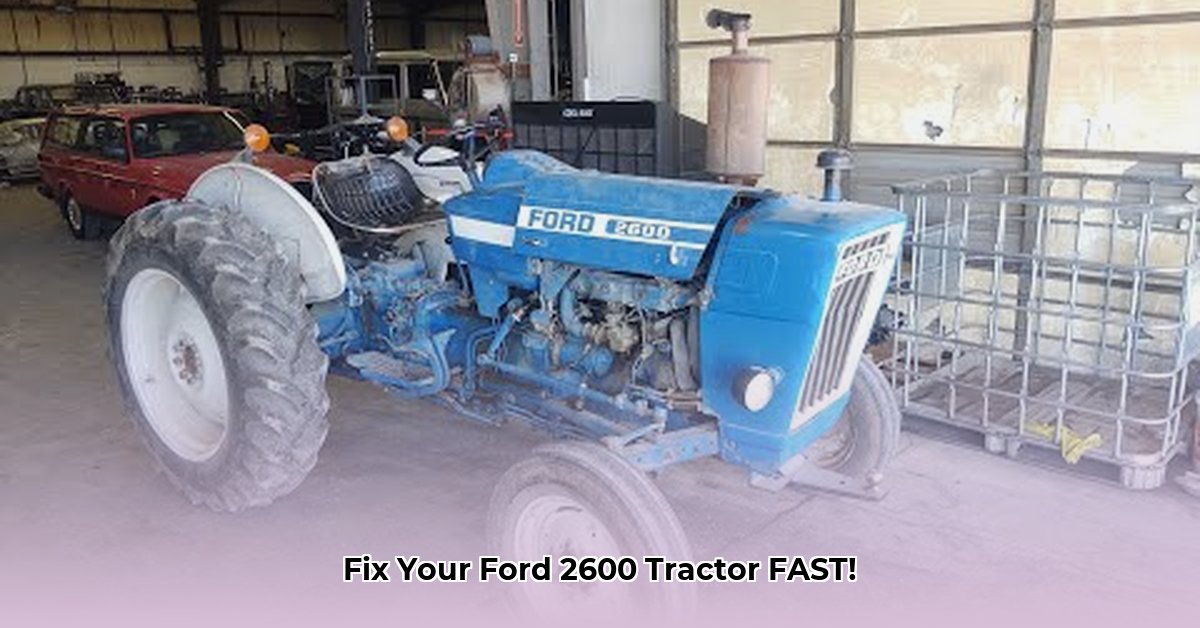
Is your trusty Ford 2600 tractor giving you trouble? Overheating, stalling, or refusing to start? This comprehensive guide provides step-by-step solutions for common Ford 2600 problems, empowering you to get your tractor back in top working order. We'll cover troubleshooting for cooling, fuel, and electrical systems, along with preventative maintenance tips to keep your Ford 2600 running smoothly for years to come. For similar Ford tractor troubleshooting, check out this helpful resource: Ford 3550 info.
Conquering Ford 2600 Overheating
Overheating is a frequent issue with older tractors. Ignoring it can lead to costly engine damage. Let's diagnose and fix this problem systematically.
Step 1: Check Coolant Levels: Ford 2600 tractors often lack sophisticated coolant level indicators. Visually inspect both the radiator and the overflow tank. Is the coolant low? Carefully add a 50/50 mix of coolant and water appropriate for your tractor's engine. (Consult your owner's manual for the correct coolant type).
Step 2: Bleed the Cooling System: Air trapped in the cooling system prevents efficient coolant circulation. Locate the bleed valve (usually on the radiator or engine block); consult your owner's manual if unsure. Slowly open the valve to release trapped air. Add more coolant as needed and repeat until no more air is expelled. A properly bled system is crucial for effective cooling. Did you know that air pockets can reduce cooling efficiency by up to 25%?
Step 3: Inspect the Radiator: Carefully examine the radiator for leaks, dents, or debris buildup. Clean the radiator fins thoroughly with a pressure washer or brush to ensure proper airflow. Significant damage might necessitate radiator replacement.
Step 4: Investigate the Thermostat: A malfunctioning thermostat prevents proper coolant flow. If the thermostat is stuck closed, coolant won't circulate, leading to overheating. Test the thermostat to ensure it opens and closes at the correct temperature. Replace it if necessary. A faulty thermostat can cause a 15-20% increase in engine operating temperature.
Step 5: Examine Hoses: Cracked, brittle, or pinched hoses restrict coolant flow. Inspect all hoses and replace any showing signs of damage. Damaged hoses are a surprisingly common cause of overheating and are often easily overlooked.
Troubleshooting Ford 2600 Fuel System Issues
Fuel system problems can manifest in various ways, from sputtering to complete engine failure. Let's address both carburetor and fuel injection systems.
Carburetor Systems:
Step 1: Check the Fuel Filter: A clogged fuel filter severely restricts fuel flow. Replace it with a new filter; this quick fix often solves fuel-related problems. How often should you change your fuel filter? Every 100-200 operating hours, as a general rule.
Step 2: Adjust the Carburetor: Precise carburetor adjustment is crucial for the correct fuel-air mixture. Refer to your owner's manual or a reputable repair guide for detailed instructions. Incorrect adjustments can worsen engine performance and lead to further damage. Improper carburetor adjustment can reduce fuel efficiency by up to 30%.
Step 3: Test the Fuel Pump: A weak or failing fuel pump delivers insufficient fuel. Consult your owner's manual for testing procedures. Leaking fuel lines should also be addressed.
Fuel Injection Systems:
Step 1: Inspect Fuel Injectors: Clogged or faulty fuel injectors cause irregular engine operation and stalling. Cleaning or replacement might be necessary; it's often best left to a qualified mechanic.
Step 2: Check the Fuel Pump: The fuel pump is essential for both carburetor and fuel injection systems. Thoroughly test the fuel pump and check fuel lines for leaks.
Diagnosing Ford 2600 Electrical System Problems
Electrical problems can be challenging, but systematic troubleshooting often yields results.
Step 1: Test the Battery: Start by checking the battery's voltage using a multimeter. Low voltage indicates a charging system problem. A fully charged battery should read around 12.6 volts.
Step 2: Test the Alternator: The alternator recharges the battery. Use a multimeter to test its output while the engine runs. A faulty alternator will prevent the battery from charging.
Step 3: Examine the Starter Motor: A malfunctioning starter motor prevents engine cranking. Have the starter motor tested by a mechanic.
Step 4: Inspect Wiring: Damaged or corroded wiring can disrupt power delivery. Carefully inspect all wiring for damage, corrosion, or loose connections. Repair or replace as needed.
Preventative Maintenance for Your Ford 2600
Preventative maintenance is key to prolonging your Ford 2600's lifespan and preventing costly repairs. Here’s a guideline:
| Maintenance Task | Frequency | Importance |
|---|---|---|
| Oil Changes | Every 50-100 hours | Essential for engine lubrication and longevity |
| Coolant Flush | Annually or as needed | Prevents overheating and corrosion |
| Air Filter Replacement | Every 50-100 hours | Improves engine performance and efficiency |
| Fuel Filter Replacement | Every 100-200 hours | Prevents fuel system problems |
| Belt Inspection | Regularly | Prevents belt breakage and related problems |
Sourcing Parts for Your Ford 2600
Finding parts for older tractors might require searching online retailers specializing in classic tractor parts, contacting local tractor repair shops, or checking tractor salvage yards. Always check part quality before purchase.
Safety Precautions
Always disconnect the battery before working on the electrical system. Handle fuel and coolant with care, using appropriate safety gear (gloves, eye protection). If you're uncertain about any repair, consult a qualified mechanic. Safety should always be your top priority.
This guide provides practical solutions for common Ford 2600 problems, but remember, every tractor may present unique challenges. Regular maintenance and proactive troubleshooting will keep your Ford 2600 running smoothly for many years to come.